[TIFF Review] Possible Love, A Long Winter, The Debut
During days six through eight of the Toronto International Film Festival, I watched three features, including one of the finest cinematic achievements of the year—Lee Chang-dong’s Possible Love. Additionally, The Debut delivered one of the most captivating lead performances of the festival season.
Possible Love
Directed by Lee Chang-dong, Venice Film Festival Silver Lion for Best Director winner for Oasis, the film stars Cannes Film Festival Best Actress winner Jeon Do-yeon (Secret Sunshine) and three-time Blue Dragon Film Award Best Actor winner Sul Kyung-gu (The Book of Fish) as a married couple, alongside Baeksang Arts Award Best Actor winner Zo In-sung (Something Happened in Bali) and Blue Dragon Film Award Best Actress winner Cho Yeo-jeong (Parasite) as another married couple. Additionally, Jung Jae-il, who won a Grand Bell Award for Parasite, serves as the film's music composer.
Every couple wants to find some sense of happiness. For Ho-seok (Sul Kyung-gu) and Mi-ok (Jeon Do-yeon) the hope is to move on from the trauma caused by the disastrous outcome of a labour dispute. When they are approached by young, ambitious documentary filmmaker Ye-ji (Cho Yeo-jeong) to take part in her latest project, they become intimately intertwined with her and her business mogul husband, Sang-woo (Zo In-sung).
Revelations of interpersonal suffering come to light — both in front of and behind the camera — as the documentary develops, and tensions between the couples start to rise. Questions are asked around who gets to tell whose story, who speaks for whom, and what responsibilities observers have when taking on the perspective of the disenfranchised. As the lives of Ye-ji, Mi-ok, Sang-woo, and Ho-seok become increasingly entangled, tensions mount.
Framed around the making of a documentary, the camera remains an observational witness for much of the runtime, documenting the filmmaking process and the evolving dynamics among the four main characters. Periodically, however, the perspective shifts directly into the lens of the documentary camera to capture intimate monologues from Mi-ok. Looking straight into the frame, she shares her inner thoughts and emotions in a manner that feels remarkably personal and unfiltered.
This approach succeeds largely due to the deeply resonant performances of Jeon Do-yeon and Sul Kyung-gu. Serving as the emotional anchor of the film, Jeon delivers a subtle and moving portrayal that shifts sharply depending on whether she is on or off camera. Sul, playing the quiet and traumatized Ho-seok, relies on restrained facial expressions, heavy gazes, and subtle physical posture rather than heavy dialogue to communicate profound grief—leading up to a staggering emotional release in the film's climax.
The narrative pits two married couples against one another: working-class partners Ho-seok and Mi-ok, and upper-middle-class couple Ye-ji (a documentary filmmaker) and Sang-woo (a corporate mogul). Their stark differences in lifestyle, profession, and attire serve as a backdrop for a nuanced exploration of class dynamics. Ye-ji proves to be a particularly compelling character; living in luxury thanks to her husband's success, she attempts to foster close ties with her working-class subjects. Believing she can easily blend into their world, she remains oblivious to her own intrusive posture. Her friendship with Mi-ok raises thought-provoking ethical questions: Is she seeking a genuine human connection, or is she cultivating a comfortable environment purely for the sake of her documentary? Is Mi-ok a true friend, or merely a subject to be captured on camera? As the four characters become increasingly entangled, these delicate boundary lines create a deeply compelling narrative.
At its core, the film is a study of marital relationships. Ho-seok initially retreats into isolation due to past trauma, creating a rift between himself and Mi-ok. Yet, once he opens up, the two begin to reach a point of mutual understanding and reconciliation. Conversely, Ye-ji and Sang-woo begin as a seemingly harmonious and transparent couple, only for hidden secrets to drive a quiet wedge between them by the film's conclusion. Lee Chang-dong’s screenplay is exquisitely crafted, offering both a rigorous critique of class power dynamics and an intimate, emotionally devastating character study.
A Long Winter
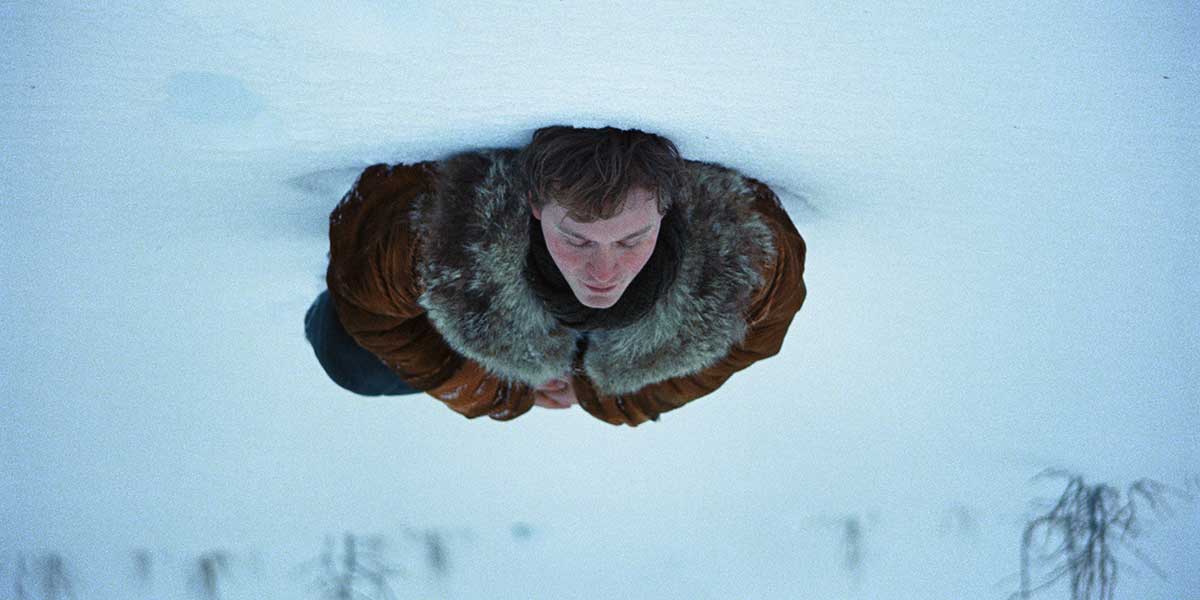
Directed and written by Andrew Haigh—winner of Best Film and Best Director at the British Independent Film Awards for All of Us Strangers—the film is an adaptation of a short story by Colm Tóibín. The ensemble cast includes Fred Hechinger (Gladiator II), Kit Connor (Heartstopper), D'Pharaoh Woon-A-Tai (Warfare), two-time Emmy Award winner Ebon Moss-Bachrach (The Bear), and Caitríona Balfe (Outlander).
A Long Winter follows Mike (Fred Hechinger), a young man on the cusp of adulthood whose life is upended when his mother disappears during the first blizzard of the season. As the search stretches from days into weeks, the onset of winter becomes inseparable from the family’s slow reckoning with the possibility that she may never return.
A Long Winter traces a protagonist's journey toward self-awareness and personal awakening. The story follows Mike, a young man navigating the sudden disappearance of his mother during a harsh winter. Set against the snow-covered peaks of Alberta, Canada, the grand, sweeping cinematography serves to heighten Mike's profound isolation within the frozen landscape. While most people eagerly anticipate the end of winter, for Mike, the spring thaw brings a harrowing reality: the melting snow will inevitably expose his mother's buried body. True to its title, the film captures a long, agonizing season filled with internal conflict.
Caitríona Balfe delivers a poignant supporting performance as the mother, conveying a deep sense of repression and a desperate longing for liberation despite limited screen time. As Mike searches for answers, he uncovers uncomfortable truths about his parents' marriage and his mother's struggles, prompting him to confront his own desires and cultivate a distinct identity. Fred Hechinger skilfully captures his character's gradual evolution from a naive youth into a self-aware adult. Meanwhile, Ebon Moss-Bachrach plays the father—a hyper-masculine, abrasive figure who ultimately kept the mother trapped. While written as an antagonist on paper, Moss-Bachrach infuses the character with a quiet loneliness and self-destructive sorrow that evokes unexpected empathy.
The Debut
The film is written, directed by, and stars Jesse Eisenberg (A Real Pain). The high-profile ensemble cast features Oscar Best Actress winner Julianne Moore (Still Alice), Golden Globe Best Actor winner Paul Giamatti (The Holdovers) and Halle Bailey (The Little Mermaid).
Mona Friedman (Julianne Moore) feels stuck in her tedious suburban housewife life. When a role with a community theatre company arises, she jumps at the chance to try out. To her surprise, she lands a spot in the production.
Hard-headed theatre director Jerry (Paul Giamatti) sees a spark in Mona and pushes her to test the limits of what she can bring to the role. Which she does, obsessing over nailing her first performance.
Similar to A Long Winter, the Debut explores a protagonist's awakening and shedding of social masks, though screenwriter Jesse Eisenberg channels this transformation through sharp comedy that eventually escalates into full-blown farce. Mona has spent most of her life hidden behind the masks of "housewife," "wife," and "mother"—sacrificing her identity for her family while suppressing her own ambitions. Pushed to her limit by Jerry, she tears off the mask to uncover her true self.
Julianne Moore delivers a masterclass performance in this pivotal scene, shifting through complex emotional gears to evoke both sympathy and unease. Driven by fast-paced dialogue, the sequence stands out as one of the most memorable acting showcases of the year. From that moment onward, Mona takes firm control of her own destiny. However, when her need for control turns radical, her actions begin to unravel the lives of those around her—proving that no individual exists in total isolation. While the screenplay's late-stage satire on method acting strays somewhat from the thematic groundwork laid in the first half, the stage-play production setting and theatrical outdoor set designs give the film's final act a delightfully absurd edge.
Photos: TIFF