[TIFF Review] Your Mother Your Mother Your Mother、Elsinore、Musk、Wild Wild East
Over the third through fifth days of the Toronto International Film Festival, I caught four films that highlighted powerhouse performances from two-time Academy Award winner Mahershala Ali and Berlin International Film Festival Silver Bear winner Andrew Scott.
Your Mother Your Mother Your Mother
Written and directed by Bassam Tariq, the film stars two-time Academy Award winner Mahershala Ali (Moonlight, Green Book), John Cho (Star Trek franchise), Giancarlo Esposito (Breaking Bad franchise), Abubakr Ali, Emmy Award winner Tramell Tillman (Severance), and Tiffany Boone (Nine Perfect Strangers).
Latif (Mahershala Ali) is a devout Muslim and a loving family man who also happens to be a contract killer. He has a strict code: he never uses guns and he only accepts targets the world would be better off without.
After his beloved wife dies, Latif resolves to end his criminal career and focus on caring for his three children — but his longtime employer Mike (Laith Nakli) has other plans. Latif is having a hard enough time finding breast milk for his baby girl and wants no part in Mike and cowboy Haun Yoon’s (John Cho) rapidly escalating feud but, as his bloodstained past comes back to haunt him, he may have no choice in the matter.
Although the protagonist is a professional hitman, the film bypasses standard action-movie tropes to dig deep into themes of family and religious faith. The protagonist embarks on dangerous missions not for revenge or money, but to secure breast milk for his infant daughter. In one standout mid-movie set piece, the hitman—who strictly adheres to Islamic teachings and fights exclusively with bladed weapons—brutally fends off an onslaught of enemies in a nightclub while cradling his baby, delivering a fresh spin on the genre.
Set in Houston, the cinematography frequently captures streetscapes before flipping upside down, evoking a descent into an underground world. Unlike similar hitman thrillers that remain shrouded in darkness, the film’s climax is striking: the protagonist, clad in dark assassin attire, single-handedly fights through a pristine, solemn white Christian gathering—creating a sharp visual and tonal contrast. Mahershala Ali’s performance as Latif serves as the film's emotional core; his bond with his daughter brings warmth and unexpected humor, while his expressive gaze conveys deep emotion without words. While the final action set piece may not align with standard blockbuster expectations, the film stands out as a compelling study of faith and family.
Elsinore
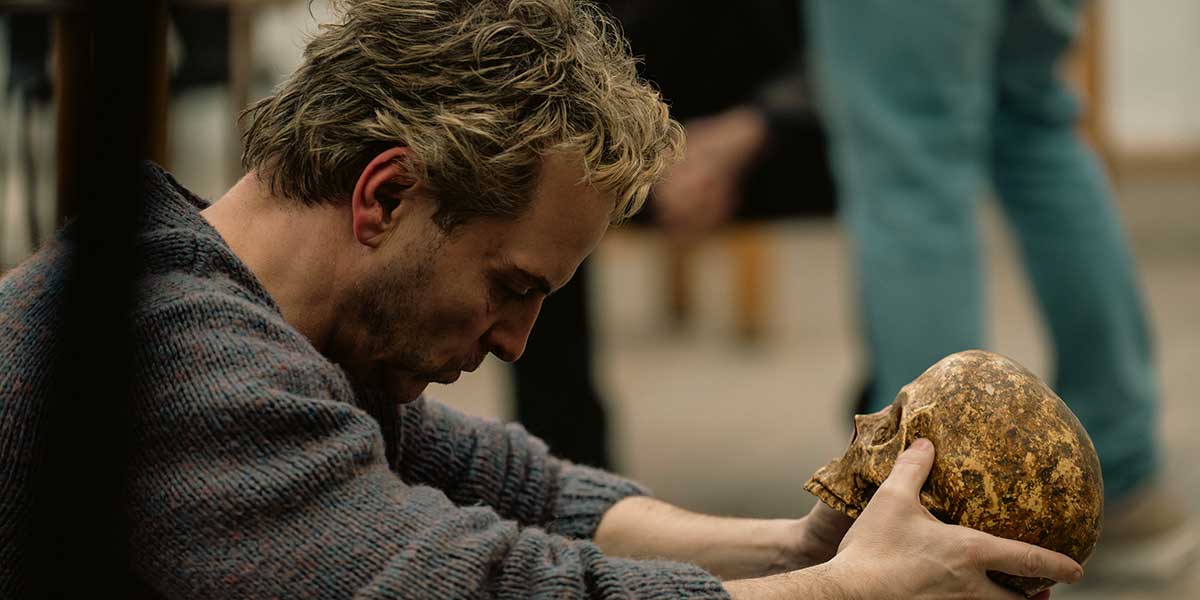
Directed by Simon Stone (The Dig), the film won the International People's Choice Award at the festival. It stars Berlin International Film Festival Silver Bear winner Andrew Scott (Blue Moon) and Academy Award winner Olivia Colman (The Favourite).
Ian Charleson is widely known as the real-life star of TIFF ’81’s Chariots of Fire, the first People’s Choice Award winner to receive the Oscar for Best Picture. Its piano-led ubiquity in pop culture follows the Scottish actor everywhere, making him yearn less for Hollywood and more for his theatre roots. When Daniel Day-Lewis walks off stage as Hamlet at London’s National Theatre, the role of a lifetime appears for Charleson — but so does an AIDS diagnosis. Dream and nightmare collide as Charleson strives to command the stage and survive as long as possible.
Centering on a gay actor’s struggle with AIDS, the narrative follows a fairly conventional script without breaking new ground in structure or thematic scope. In the second half, a montage intertwines the protagonist's rehearsals for Hamlet with his deteriorating health, set to a swelling orchestral score designed to draw parallels between the two roles in the face of mortality. However, the heavy-handed music choices leave the emotional beats feeling somewhat melodramatic.
Despite these script limitations, Andrew Scott’s performance elevates the material significantly. He captures the character's vulnerability and physical pain with devastating intimacy—particularly during a pivotal scene coming out to his parents—while showcasing a resilient spark of humanity near the end of life.
Musk
This documentary is directed by Oscar and Emmy winner Alex Gibney. Elon Musk has amassed so much power, he’s like a character in a Marvel comic book. A short recap of his handiwork: Tesla popularized electric vehicles; Starlink expanded the reach of the internet; Twitter bowed to his takeover; and DOGE radically transformed the US government. Musk has been at the centre of AI development and this past summer, the IPO for SpaceX made him the richest man in the world. His influence arguably touches everyone on the planet. Surely this is worth fresh scrutiny.
After nearly four years of work, Oscar-winning filmmaker Alex Gibney delivers his most ambitious and epic documentary, seeking to understand the history and motivations of the ultimate tech bro. When this film was first announced, Musk immediately denounced it on Twitter and refused to participate. But that didn’t impede Gibney, who draws upon countless hours of interviews that Musk has given over the years. Even more revealingly, Gibney conducts new interviews with figures who have known Musk up close and personal, including the mogul’s father, Errol Musk.
The news cycle moves so fast, it’s hard to remember that Musk was once at home among liberals, with his companies promoting clean energy and invoicing the Obama administration for hundreds of millions in tech contracts. What drove him into the world of Donald Trump?
Musk frequently invokes science fiction stories and has coyly wondered aloud if we’re living in a video game–like simulation. Playing off this idea, Gibney leans visually into an innovative graphic treatment throughout the film. But make no mistake: this is really happening.
Clocking in at four hours, Alex Gibney's documentary provides a sweeping overview of Elon Musk’s commercial, political, and ideological footprint. The film tackles the controversies surrounding Tesla’s Full Self-Driving technology, his influence on social media and US elections, and his personal life and family disputes. Given its vast scope, the documentary leans toward broad summaries rather than deep-dive investigative journalism, offering few brand-new revelations.
Nevertheless, as global political polarization deepens and AI advances at a breakneck pace, this historical overview may gain further relevance over time. The second half focuses heavily on Musk’s involvement with the Department of Government Efficiency (DOGE), detailing the use of government data, sweeping budget cuts, and foreign aid reductions. These policy shifts will likely spawn future documentaries, positioning this film as a crucial opening chapter. Furthermore, given the ongoing industry debate over generative technology, the documentary makes the bold yet fitting choice to incorporate AI-generated simulation segments during interview sequences.
Wild Wild East
Directed by Jan Holoubek, Polish Film Award winner for Best Director and director of two-time Polish Film Award-winning series The Mire and High Water, the film stars Itay Tiran and European Film Award Best Actress winner Joanna Kulig (Cold War).
Occupied Poland, winter 1943. Almost two years have passed since the Third Reich’s attack on the USSR and German forces are suffering heavy losses while the extermination of European Jews is at its height.
Enter Martin Wolff (Itay Tiran), a German official sent to a remote village to investigate the disappearance of a lawyer believed to be safeguarding a stockpile of gold belonging to a wealthy Jewish family. Wolff’s reputation proceeds him, and his arrival to a village of traumatized inhabitants, who include Kuliś (Piotr Trojan), his scrappy wife (Joanna Kulig), Kaim (Robert Więckiewicz), and his wife (Magdalena Różczka), sends ripples through a community ripe with impoverished locals, corrupt collaborators, and gruesome — albeit paranoid — Nazi authorities.
Moreover, whispers of the hidden fortune have spread and people are getting desperate. As the gritty web of betrayal and greed is revealed, Wolff’s presence unearths more than meets the eye, revealing a landscape where the past and present refuse to be buried and where everything comes with a price.
Set in Poland during the late stages of World War II as German forces were retreating, the film unfolds in a desolate, frozen village reminiscent of a ghost town. Director Jan Holoubek leans into western genre conventions, framing the bleak setting through a classic frontier lens.
Although the protagonist is a government administrator rather than a military officer, his authority within the village creates dynamic power struggles between local residents and German military personnel. While the setup and character dynamics are promising, the climax falls back on predictable tropes that feel somewhat rushed. The protagonist’s true identity remains a central plot point; though he manages to conceal it from those around him, he is eventually forced to confront his authentic feelings amid the horrors of war. Itay Tiran delivers a multi-layered performance, expertly charting his character's shift from quiet confidence to near emotional collapse.
Photos: TIFF